
Why these evenings exist
Community Critique Nights began because members kept asking the same thing: once a set of pictures is made, who looks at it with you? Photographing a neighbourhood or a family tradition is one skill. Seeing whether the frames hold together, and whether they treat the people in them fairly, is another, and it is hard to do alone.
As photo editor I lead these evenings, and the idea is simple. Members bring prints or screens, set them out, and the rest of the room responds with kindness and honesty. Nobody is graded, and nobody is expected to defend a picture. The aim is to leave with a clearer sense of what your work is already saying and what it still needs.
What members bring
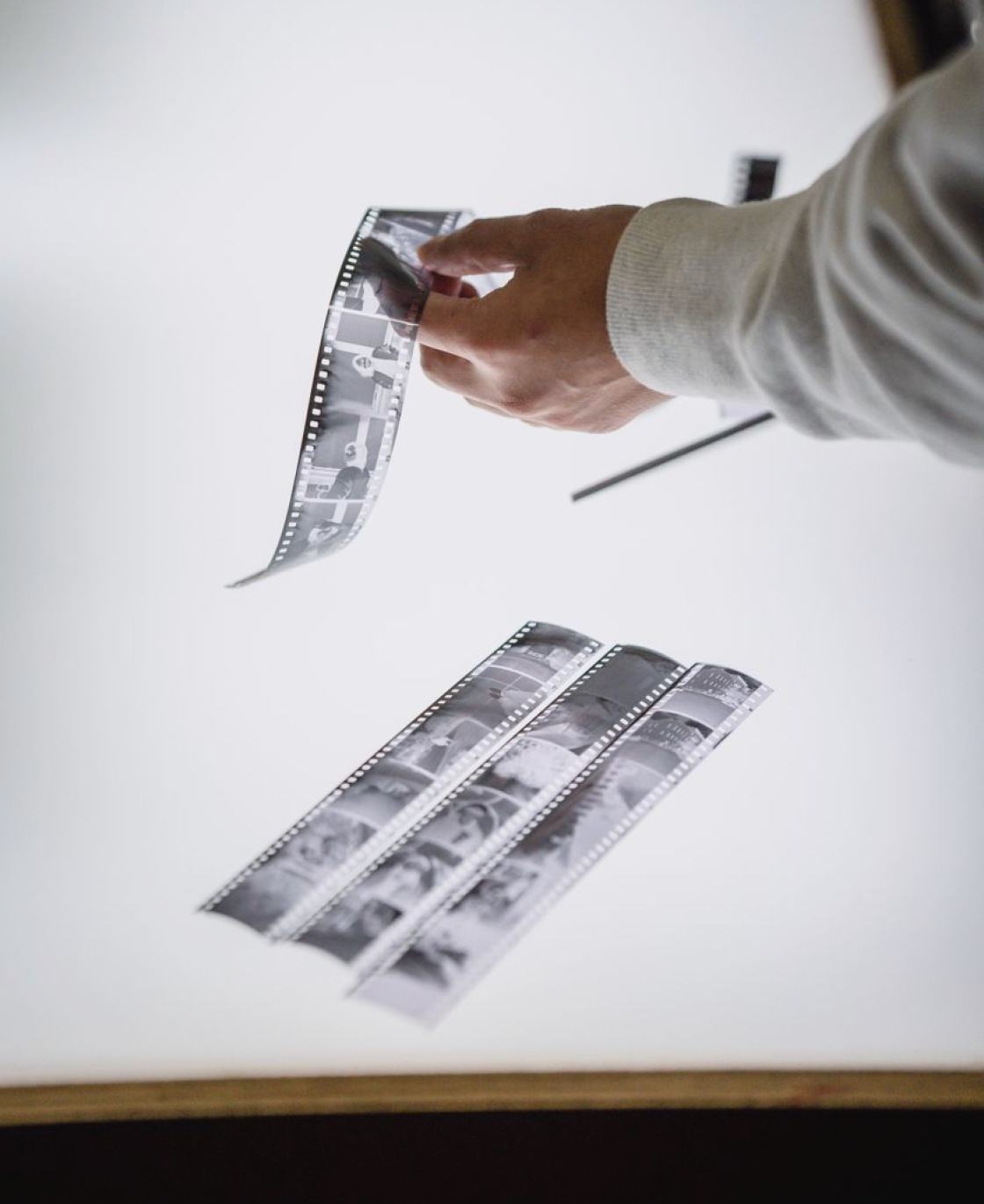
Most people arrive with a small set rather than a single image: six to twelve frames from a walk, a portrait session, or a story they have been following for months. Prints are welcome because they can be moved around the table, paired and re-sequenced by hand, which often shows a problem that a screen hides.
Others bring a laptop or tablet, and that works just as well. Work in progress is as welcome as work that feels finished. If you are unsure, bring the pictures you keep returning to and the ones you cannot decide about. Both kinds start good conversations, and a rough set often gets more useful comments than a polished one.
- Printed sets, loose or mounted
- A laptop or tablet with your files
- One or two frames you are unsure about
How the feedback is given
We keep to a short, steady rhythm. The member whose work is on the table says a few words about what they were trying to do, then stays quiet while others look. Comments begin with what is working and why, described plainly: the light on a doorway, a gesture that feels unposed, a caption that tells the truth.
Only after that do we turn to questions and suggestions, always phrased about the pictures and never about the person who made them. If a remark cannot be said kindly, it is usually not yet a useful remark. I step in to keep the pace even, so that quieter members have the same time as those who speak easily.
Looking at people fairly
Because our work is documentary, many pictures show real neighbours. Part of every critique is asking how those people would feel seeing the image beside its caption. Did they know they were being photographed? Does the caption describe them or judge them? These questions are not meant to slow anyone down; they are part of making honest work.
Members often find that a small change, such as a plainer caption or dropping one frame that exposes someone needlessly, makes a set stronger as well as more respectful. We talk about consent as a working habit, the same way we talk about exposure or framing, so it never feels like an afterthought.
Settling in for the evening
If you have never been, expect a relaxed room, a long table and a pot of tea. We usually look at a few sets in an evening, so each person gets unhurried attention. Newcomers may simply watch the first time and join in when they feel ready; nobody is asked to present on arrival.
As the evenings grow darker through these autumn weeks, indoor sessions suit the season well. Prints are easy to read in warm lamplight, and people tend to linger over them. Thomas Beaulieu, our community liaison, can answer practical questions about timing and what to bring if you write to us through the contact page.
What members take home
Most people leave with a short list rather than a verdict: a frame to cut, a pairing to try, a caption to rewrite, a place to return to with the camera. These are small, practical notes, and they tend to be the ones that change how the next roll or memory card gets used.
Over time members also learn to see their own work more calmly. Looking at other people's sets trains the same eye. Several have told me that the habit of describing what they see, before judging it, has carried over into how they edit alone at home, long after the evening itself has ended.
Community Critique Nights are a quiet, practical part of what we do: a table, some pictures and people willing to look closely and speak kindly. If you have a set you are curious about, bring it along. You do not need to be experienced, only willing to listen and to show what you have so far.