
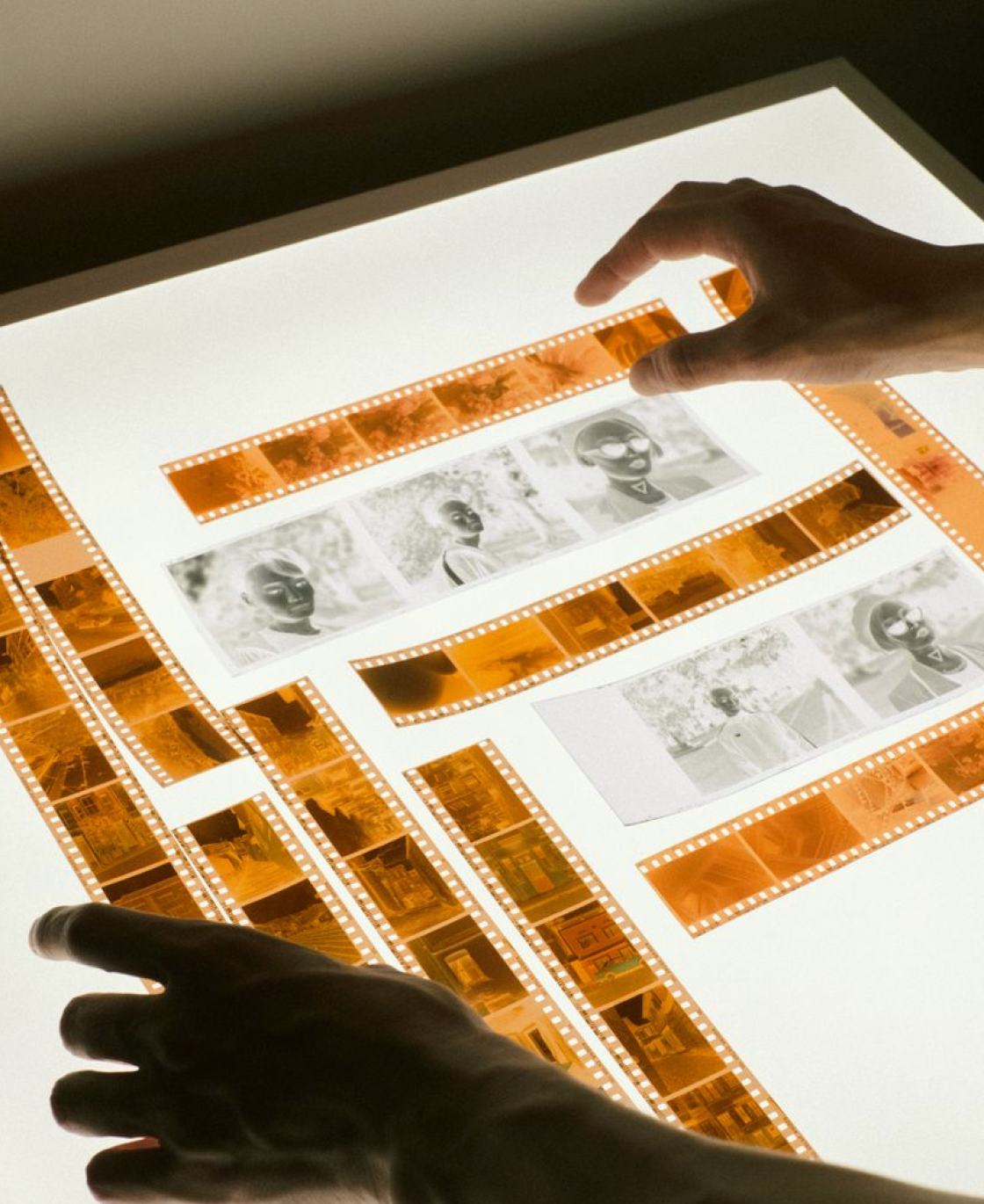
Start with a small, honest selection
The most common mistake before a critique night is bringing too much. A member arrives with forty images, hoping the group will tell them which ones work, and the evening is spent flicking through frames without ever settling on one. Aim for between six and ten photographs from a single piece of work, whether that is a walk through one neighbourhood, a handful of portraits or the first draft of a photo essay.
Choose images you are genuinely unsure about, not only the ones you already love. A critique is most useful when it answers a real question, such as whether the sequence flows, whether a portrait feels respectful, or whether a caption says too much. Write that question on a card and keep it beside your prints so you can raise it when your turn comes.
If the work shows people from your community, think about whether they know you photographed them. We ask members to bring only images they would be comfortable showing to the subject.
- Six to ten images from one body of work
- One clear question you want answered
- Only photographs you would show their subjects
Printing, screens and what to carry
Prints are welcome and often reveal more than a screen does. A modest print, around eight by ten inches on ordinary matte paper, is plenty. Colour, tone and detail show differently on paper, and the group can pass the images around the table, lay them side by side and move them into a new order without anyone needing a cable or a charger.
If you prefer to bring a laptop or tablet, turn the screen brightness down to a moderate level and leave your images in a single folder in the order you intend to show them. Bright screens in a dim hall flatter nearly every photograph, which makes honest feedback harder for everyone.
Bring a pencil and a few sheets of plain paper too. Many members like to jot notes while others speak, rather than defending a frame in the moment. You will remember far more of the advice if you write it down than if you try to hold it in your head.
- Matte prints around eight by ten inches
- Screen set to moderate brightness
- Pencil and paper for your own notes
Presenting your work without apologizing for it
When your turn comes, take a minute to say what the work is about, where and when it was made, and what you were trying to do. Then stop talking. It is tempting to explain every frame or to open with an apology, but both habits steer the room. The group should first see the photographs the way a reader would, without commentary.
Let the silence sit for a moment while people look. Then ask your question. If someone says something that stings, resist the urge to correct them. You are not obliged to agree with anything you hear, only to listen and write it down. You can decide later what to keep.
Daniel Okafor, our photo editor, usually leads the evening and keeps the pace gentle. He will step in if one person has had a long turn or if a comment drifts from the picture toward the photographer.
Giving feedback that helps
Good feedback describes before it judges. Start with what you see: where your eye goes first, what the light is doing, what seems to be happening between the people in the frame. Then say what you felt or wondered. Observations like these give the photographer something to work with, whereas a plain verdict of good or weak gives them nothing.
Be specific and be kind in the same breath. Saying the second image has a lovely quiet mood but the crop cuts off the hands that seem to be the point of the scene is far more useful than saying it feels off. Suggest, do not instruct, and offer your view as one reader's view.
Aim to name one thing that works and one thing to try for every photograph you comment on. That simple habit keeps the room generous without turning it into flattery, and it makes members more willing to bring unfinished work.
- Describe what you see before you judge it
- Name one strength and one thing to try
- Speak of the picture, never of the person
Receiving critique and deciding what to keep
After the evening, give yourself a day before touching your files. Feedback often feels sharper in the hall than it does the next morning, and some comments only make sense once you have lived with the prints for a while. Read your notes, mark the points that more than one person raised, and set aside the ones that did not fit your intent.
Not every suggestion deserves action. If three people found the opening image confusing, take that seriously. If one person wished a portrait were in colour and you chose black and white deliberately, you can simply keep your choice. The purpose of the evening is to see your work through other eyes, not to hand over your decisions.
Try one change at a time and bring the revised set to a later night if you wish. Seeing how a sequence has moved is often the most rewarding part for the whole group.
Practical details for a first visit
If this is your first critique night, you do not need to bring anything at all. Many newcomers simply come to watch one evening and listen to how the conversation is held, then bring work the next time. Nobody will ask you to present, and nobody will mind if you stay quiet until you feel at home in the room.
We meet in Windsor, and the hall is set up with a few large tables, so there is room to lay out prints. Thomas Beaulieu, our community liaison, welcomes new faces at the door and can answer questions about what to expect. You can reach him through the contact page or by phone.
Come with curiosity and a willingness to be both honest and gentle. Those two things matter far more than the camera you own or the number of years you have been photographing.
- Newcomers may attend and simply observe
- Large tables are available for laying out prints
- Questions go to the contact page or by phone
A critique night works best when everyone arrives prepared and generous: a small selection, a clear question, prints you can pass around, and an ear open to honest comments. Treat the feedback as material to weigh, not a verdict to accept or resist. Keep your notes, take your time, and return with a revised set when you are ready. The group is there to help your documentary work say what you meant it to say.