
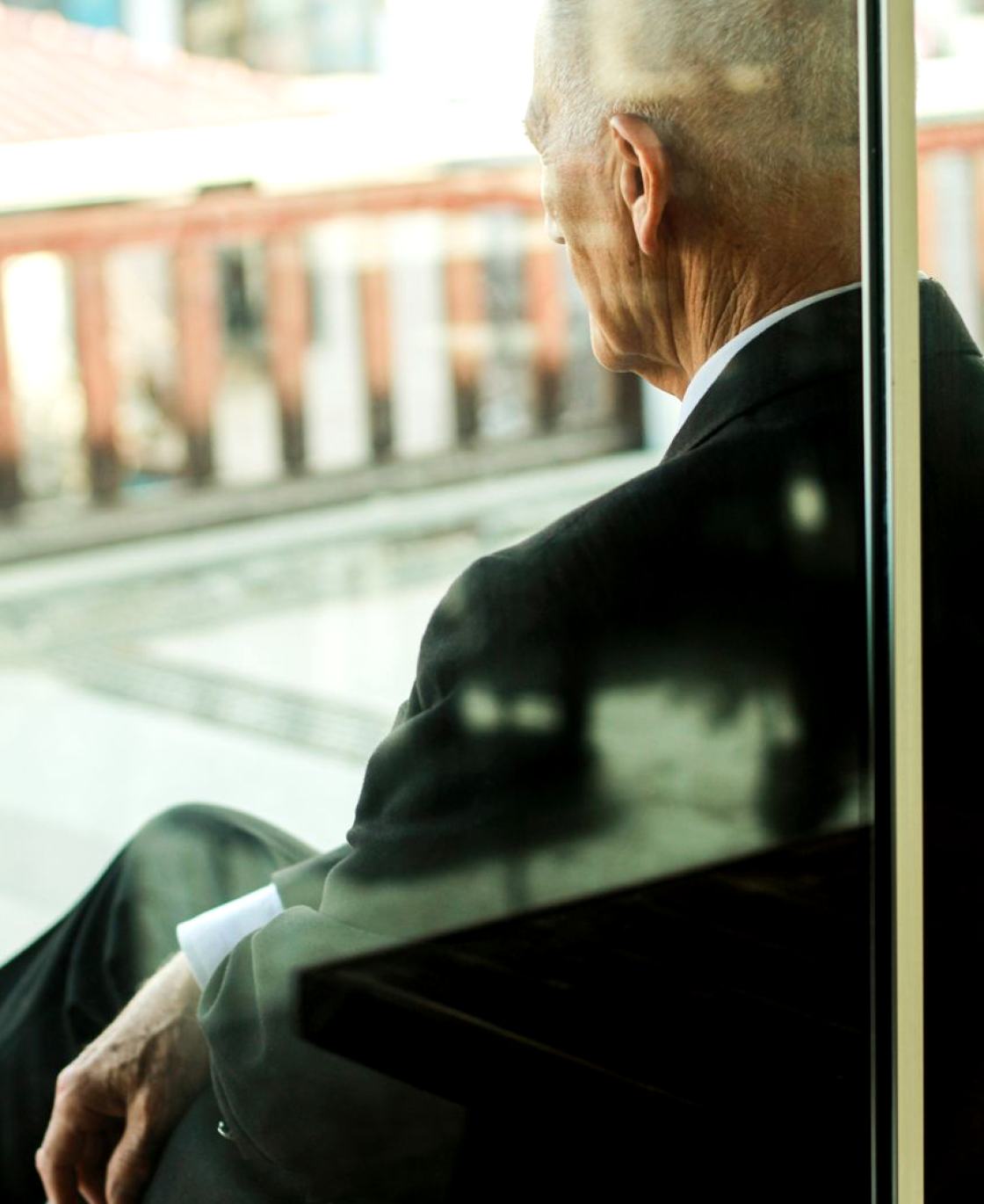
Starting with the window, not the camera
When people ask what gear they need for a Portrait Evening, I tell them to look at the room first. Our sessions run in natural window light, and the window does more of the work than any lens. In mid autumn the sun sits lower, the light is softer and more golden in the afternoon, and it travels across the room more slowly than it does in July. That gives us a longer, calmer stretch of usable light.
We arrange the space around one large window and leave the overhead lights off. Overhead bulbs flatten a face and mix colours in ways that are hard to repair later. Window light falls from one side, so cheekbones, eyebrows and the lines around the eyes keep their shape. Members often notice this before we say a word about it, simply by looking at the person sitting in the chair.
Nothing about this is difficult to learn, but it does ask for patience. You watch where the light lands, you move the subject a half step, and you watch again. That habit of looking is the real tool.
The plain chair and the simple backdrop
We use an ordinary wooden chair with a straight back, a stool for those who prefer to sit lower, and a length of neutral cloth hung on the wall behind. None of it is meant to be noticed. A plain setting leaves the person as the subject, and it keeps members from hiding behind props when they are still learning to see a face.
The chair matters more than it seems. A sitter who is perched awkwardly stiffens within a minute, and the stiffness shows in the shoulders and jaw. We ask people to settle in first, rest their hands wherever feels natural, and take a few breaths before anyone raises a camera. The photographer then has time to choose an angle instead of rushing.
Many of our members are in their fifties and sixties and sometimes feel self-conscious about being photographed at all. A comfortable seat, a cup of tea within reach and an unhurried pace do more to relax them than any posing advice. The furniture is simple because the attention belongs elsewhere.
- One window, no overhead lighting
- A sturdy chair with a straight back
- Neutral cloth on the wall behind
Reflectors and small adjustments
Our only added equipment is a pair of reflectors: a white foam board and a folded piece of pale fabric. Held near the shadow side of a face, a reflector sends a little window light back and softens the dark side without making the result look lit. Members take turns holding them, which is a good way to learn how a few centimetres change the whole picture.
We also keep a small stand for a handheld camera, though most people shoot freehand. The stand matters on dull afternoons, when shutter speeds drop and a steady frame saves the exposure. We encourage members to bring whatever camera they own, whether a decent phone or a well-used body, because the method works the same.
What we avoid is a growing pile of accessories. Every added item gives a beginner one more thing to manage and one less moment to spend looking at the person in front of them. If a member wants to buy something after a session, we suggest starting with a reflector, since it costs little and teaches a great deal.
Conversation as a working method
The most important method in the room is talking. Before the first frame, the photographer and the sitter speak for a few minutes about anything at all: the walk over, a garden, the weather turning. This is where the portrait begins, because a face that is being listened to looks different from one that is being examined.
Questions are kept open and light. We suggest asking about a place the person likes, or something they made recently, and then actually hearing the answer. Expressions that arrive mid-sentence are usually truer than anything arranged. Members learn to keep the camera low while the sitter finishes a thought, then lift it in the pause that follows.
We also teach members to say what they are doing. A short phrase such as I am going to take a few now keeps the sitter informed and spares them the unease of not knowing when the picture is happening. It sounds small, yet it changes the tone of an entire session.
- Talk first, photograph second
- Ask open questions and listen to the answers
- Say aloud when the camera is going up
Consent built into every session
Consent is part of the method rather than a form at the end. Before anyone is photographed, the sitter hears how the pictures may be used, whether that means private practice, a critique night or a community note, and agrees to each use separately. They can change their mind afterwards, and a picture they dislike is set aside without discussion.
We keep this conversation plain and short. Members practise saying it aloud in their own words, because a rehearsed script sounds cold and people tend to remember what felt sincere. Thomas Beaulieu keeps our guidelines up to date and members are welcome to ask him about the wording.
Sitters are asked to look at a few frames on the camera screen before leaving. Seeing the work is a courtesy, and it often leads to a better second round, since people can say what they like and what they would rather change. Everyone leaves knowing exactly what was taken.
What to bring and what to expect
If you are thinking of joining a Portrait Evening, bring a camera you are comfortable with and a willingness to sit on both sides of the lens. Most of us take turns, and being photographed teaches you things about direction and patience that no amount of reading can. Wear what you normally wear; plain colours tend to keep the focus on the face.
Sessions are informal and run in small groups, so there is time to ask questions and try an idea twice. We do not expect finished portraits at the end of an evening. The aim is to practise looking, talking and asking, and to go home with two or three frames worth studying more closely.
Afterwards, some members bring their favourites to a critique night, where the feedback is kind and specific. That step is optional, but it is where many people notice how much the window, the chair and the conversation have shaped what they made.
- A camera or phone you know how to use
- Plain, comfortable clothing
- Time to take turns on both sides of the lens
The tools behind Portrait Evenings are modest on purpose: a window, a chair, two reflectors and a habit of listening. Each one keeps attention on the person being photographed and gives beginners room to look carefully. If you come along this autumn, you will see how much a quiet room and an honest conversation can do. Bring a camera, bring your curiosity, and expect to learn as much from sitting still as from standing behind the lens.