
Two ways to gather
Story Circles at Riverbend Lens are small gatherings where members share personal stories and talk about how to present them respectfully in words and images. Over the years we have run them in two shapes, and members often ask which one suits them. This note sets the two side by side so you can choose without guessing.
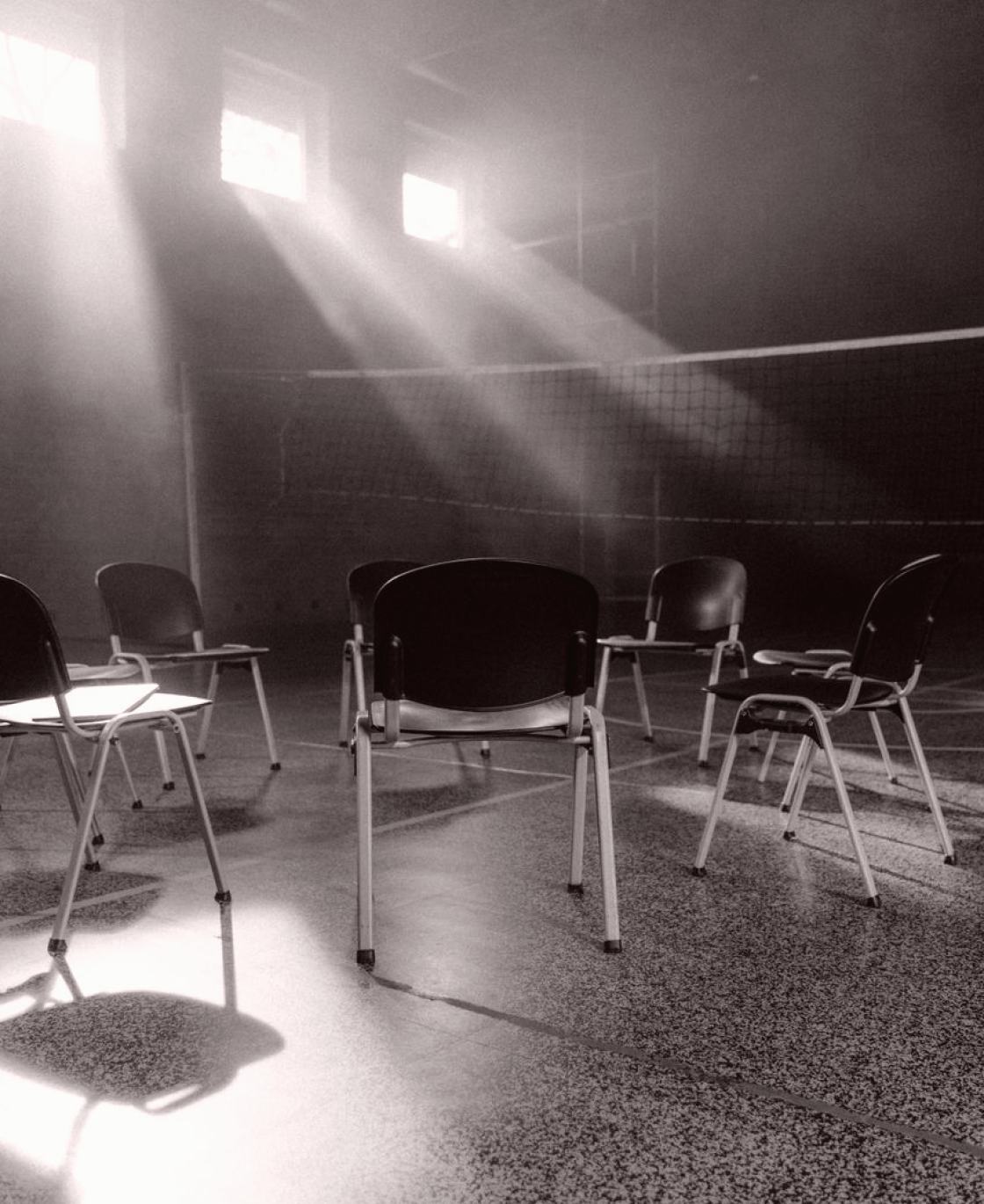
The first shape is the open evening. Anyone from the collective may come, the chairs are set in one wide ring, and a dozen or more people might be in the room. The second is the small invited round, where Margaret or I ask four to six members who already know each other a little, and we meet at a quieter pace.
Neither is better in every case. They differ in how much time each person gets, how safe it feels to say something unfinished, and how much the group can learn from varied voices. I will describe each honestly, then give my recommendation for these mid-autumn weeks, when many members are starting new projects.
What the open evening does well
An open evening brings in the widest range of experience. A retired machinist tells a story about his street, a newcomer describes a first winter in Windsor, and someone younger asks how a photograph can sit beside a memory without overruling it. That mix is hard to arrange on purpose, and it is the main reason to attend.
It is also the easiest way to meet people. You can arrive, listen for the first hour, and say nothing at all. Many members tell me that listening was exactly what they needed before they felt ready to speak.
The cost is time. With a dozen voices, each person may speak for only a few minutes, and the follow-up questions get shorter. Some stories need more room than that, and a story told in a rush can come out flatter than it really is.
- Wide range of voices and viewpoints
- Low pressure for first-time visitors
- Shorter turns for each speaker
What the small invited round does well
The small round trades variety for depth. With five people, each can speak for fifteen or twenty minutes and then take real questions. Group members begin to remember each other's earlier stories, so a comment such as "this reminds me of the bakery you described" carries weight.
This setting suits a story that is half-formed or tender. Several members have brought a first draft of a caption, or a memory about a family member they were not sure they should publish, and worked out together how to describe it kindly and accurately. That kind of careful wording is hard to do in front of a crowd.
The drawback is that a small round can become closed. If the same five people meet repeatedly, their habits harden, and newcomers feel they are intruding. We rotate the invitations for this reason, and we ask each round to leave a seat open when we can.
Questions that decide it
Rather than choosing by temperament alone, ask yourself a few practical questions. How finished is the story you want to tell? How much do you want to hear from people outside your own circle? And how comfortable are you with the idea of being listened to closely by a handful of people?
If the answers lean toward "unfinished," "I want to be heard properly" and "I am fine with a few listeners," the small round fits. If they lean toward "I am curious," "I want to meet people" and "I would rather start by listening," the open evening is the better door.
One more consideration is the subject. Stories about other people, such as a neighbour or a parent, call for extra care about consent and phrasing. Those are better tested in a small group first, where you can ask plainly whether a line feels fair to the person it describes.
- How finished is my story?
- Do I want variety or depth?
- Does my subject involve someone else?
My recommendation
For most members, I suggest starting with an open evening and moving to a small round once you have something specific to work on. The first visit costs nothing in effort: you listen, you notice how the group handles disagreement and silence, and you learn whether the tone suits you.
After that, if you have a story you care about, ask Thomas or Margaret to place you in an invited round. We try to keep those groups balanced, mixing people who write easily with those who think in pictures, so each helps the other.
If you are already confident speaking in groups and your story is nearly ready, you can reasonably skip ahead. The one case where I would hold back is a very recent or painful story. Give it a little time first, and bring it to a small round rather than a full room.
Using the circle for your photographs
Whichever shape you choose, the circle is not a separate activity from your photography. Members often leave with a clearer sense of what a picture is actually about, and with better words to place beside it. A caption that began as a label becomes a sentence with some care in it.
The autumn light and the shorter days also make this a good season to gather indoors and sort through what you photographed over the summer. Bring one image and one paragraph, and let the group tell you where they stumble or where they feel something.
What you hear back is rarely a verdict. It is usually a question, and a good question is worth more than praise when you are deciding how to present someone else's life respectfully.
If you are new, begin with the open evening and simply listen; if you already have a story that needs room, ask for a place in a small invited round. Both are run in the same spirit of respect and plain talk, and you can move between them as your work changes. Write to us through the contact page and we will tell you when the next gatherings are planned.