
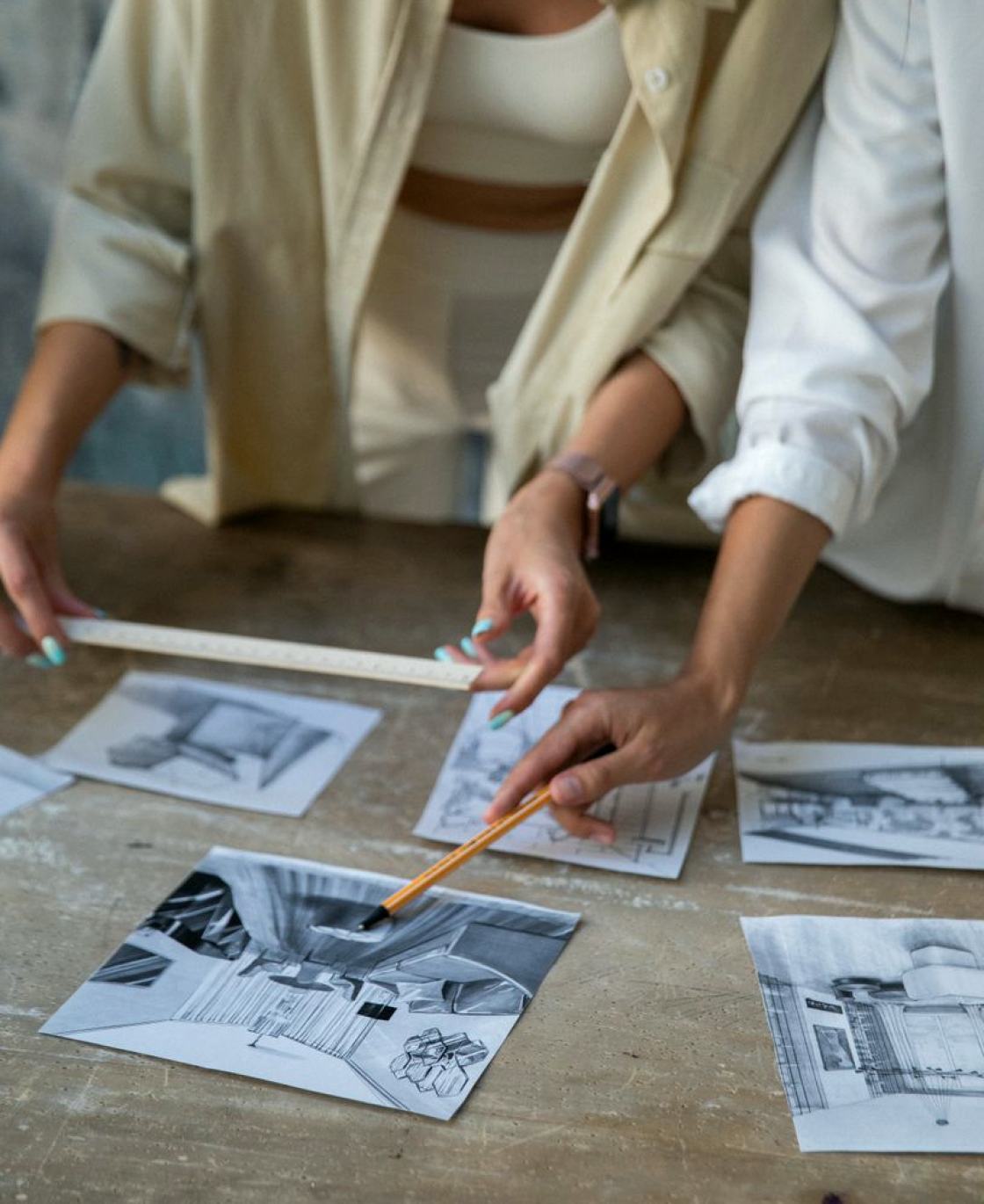
Before anyone arrives
A Critique Night starts well before the first member walks in. Earlier in the day we move tables into the middle of the room, wipe them down, and lay out clean white paper so prints can be set down without picking up dust or marks. Chairs go around the edges first and are pulled in only once the work is out, which keeps the room open and makes it easier to walk around and look.
We also check the lighting. A warm lamp beside a window works better than a bright overhead tube, because prints look flat under harsh light and screens wash out. In these mid-autumn weeks the evenings arrive early, so we bring extra lamps and test them on a sample print to be sure the colours read honestly.
Last, we put out a short sheet with the evening's ground rules and a few pencils. Nothing fancy. It simply reminds everyone that the point is to help each other see, not to hand out grades.
- Clear tables with plain paper for prints
- Warm lamps tested on a sample print
- A short sheet of ground rules at every seat
What members bring along
Members bring prints, small photo books, or images on a laptop or tablet. Prints tend to spark the longest conversations, since people can lean in, hold a corner and see the grain, but screens are always welcome. What matters is that the work is documentary: scenes from daily life, a neighbourhood, a family gathering, a stretch of street.
We ask each person to bring a handful of images, not a whole season of work. Six to ten frames is plenty. A tight selection gives the group something specific to respond to, and it also shows us how the photographer thinks about choosing, which is often where the learning begins.
A line or two about the project helps too. Where was it taken, who agreed to be photographed, and what is the photographer still unsure about? Naming a doubt out loud gives the room a way in and keeps the feedback useful rather than scattered.
How the conversation is run
Daniel Okafor, our Photo Editor, usually leads the evening, and I sit in as a second pair of ears for the writing side. Each member gets a turn. They set out their pictures, say a few words, then stay quiet while the rest of us look for a full minute. That silence feels long the first time, but it is where the best observations come from.
Then we speak in a set order. First we say what we notice, simply describing what is in the frame. Next we say what works and why. Only after that do we offer a question or a suggestion, phrased as something to try rather than something wrong. The photographer answers last, and can ignore any of it.
This order is not a trick. It slows everyone down enough that comments stay about the picture and not about taste or habit.
- Look in silence first
- Describe, then praise, then suggest
- The photographer speaks last and keeps the final say
Keeping feedback kind and useful
Kind does not mean vague. Telling someone a photograph is lovely helps no one, and telling them it is weak helps even less. We steer toward concrete remarks: the eye is drawn to the bright doorway instead of the person, the second frame repeats the first, the caption promises more than the image shows. These are things a member can act on the next time they pick up a camera.
We also talk about people in the pictures. If someone photographed a neighbour or a relative, we ask how that person felt about it and whether they would be comfortable seeing the image printed. Consent comes up in conversation as a normal part of the craft, not as a lecture.
When a comment lands badly, Daniel or I step in gently and rephrase it. It rarely needs more than that.
What happens to the notes afterwards
Members often scribble on the back of a print or in a notebook while others speak, and I encourage it. A few days later, many of them send a short message saying what they changed: a crop, a new sequence, a caption rewritten in plainer words. We do not collect these or turn them into a record of who improved; they stay with the photographer.
Sometimes a critique leads somewhere larger. A member who realises their pictures hold together as a story may take them to the Photo Essay Workshop, and one who is uneasy about a portrait might raise it at a Story Circle. The evenings feed one another quietly, without anyone planning it.
The room is tidied together at the end. Prints go back into sleeves, lamps are unplugged, and there is usually tea.
What we have learned from running them
The biggest surprise has been how much people value being looked at carefully. Most of us take pictures alone, and the simple act of seeing a stranger spend a full minute with your photograph changes how you see it yourself. Many members say they notice more on their next walk simply because they know someone will ask about the frame.
We have also learned to keep evenings small. When the table gets crowded, quieter members step back, and the conversation turns into a list of quick reactions. A modest group, with time for each person, produces better work and better manners.
Finally, we keep the format plain. No slides, no scoring, no prizes. Just good light, honest attention and a willingness to listen.
A Critique Night is less an event than a habit of paying attention together. We set the table, we look in silence, we speak in turn, and we leave with a clearer sense of what each photograph is trying to say. If you have a few frames you are unsure about, bring them along, and bring your questions too. The room is friendlier than most people expect.