
Start with why you want to walk
Before anything else, ask yourself what you hope to get from an afternoon of walking and photographing with other people. Some members come because they have a camera in a drawer and no push to use it. Others want company, a reason to notice their own neighbourhood again, or a gentle way to practise seeing before they tackle a larger photo essay. None of these is better than another, but your answer shapes what you will enjoy.
Our walks are relaxed on purpose. Nobody is graded, and nobody is racing to collect the best frame. If what you want is a technical masterclass or a competition, this is probably the wrong format. If you want to slow down, look at doorways, shop windows, people waiting for a bus and the way October light falls on brick, then a walk will likely suit you well.
- Do I want company, practice, or both?
- Am I comfortable moving slowly and stopping often?
- Would I rather learn technique or learn to look?
Check the practical side first
A walk through Windsor neighbourhoods in mid autumn means standing and strolling outdoors for a couple of hours, so think honestly about your comfort. Can you manage the distance at an easy pace? Are you happy with uneven sidewalks, a few curbs and the odd bench rest? We keep the route modest and stop often, but it helps to know your own limits before you commit to a date.
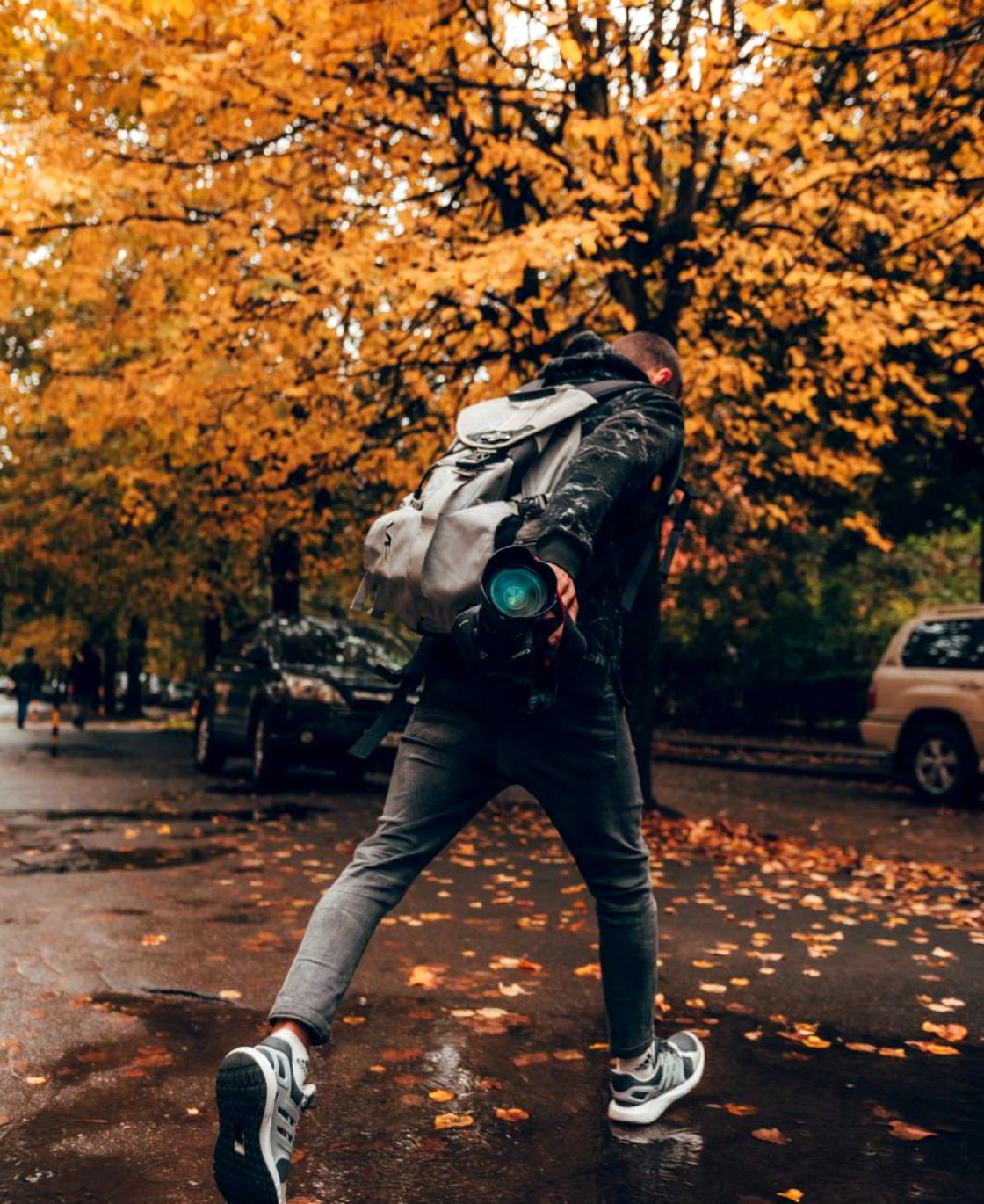
Weather matters too. Mornings can be damp and the afternoons turn cool quickly, so layers, a hat and shoes that cope with wet leaves make a real difference. A camera strap that keeps your hands free is more useful than another lens. If you are unsure whether a particular route will work for you, ask Thomas Beaulieu, our community liaison, who can describe the ground and the pace beforehand.
- Dress in layers and wear sturdy, dry-footed shoes
- Bring a small bag so your hands stay free
- Ask about the route length if mobility is a concern
Decide what you will carry
You do not need expensive equipment. A phone with a working camera is welcome, as is an older compact or a film body you have never quite learned. What matters more is that you know how to turn it on, check the battery and change the basic settings without fumbling. Practise at home once, because standing on a corner while others wait is a quiet way to lose confidence.
Bring less than you think. One camera and one lens teach you to move your feet rather than reach for options. A spare battery or a charged power bank is sensible, and a small notebook is a good habit if you like jotting down where a picture was taken and what made you stop. Leave the tripod and the heavy bag at home; a walk should feel light.
- One camera, one lens, a charged battery
- A pen and small notebook for caption notes
- Nothing heavy that will tire you by the second hour
Think about photographing people
Everyday scenes usually include people, and this is where many newcomers hesitate. Ask yourself how you feel about pointing a camera at a stranger. It is fine to be unsure. Part of what we practise on a walk is the quiet etiquette of it: stepping back, smiling, asking when a person is the subject, and putting the camera down when someone says no.
Our approach rests on respect. A photograph of a shopkeeper arranging a window is different from one that catches someone at a low moment, and we talk openly about that difference as we walk. If you would rather focus on buildings, signs, light and objects for your first outing, that is a perfectly good choice, and nobody will press you toward faces before you are ready.
- Is asking permission something I can learn to do?
- Can I accept a refusal without arguing?
- Would I start with places and objects instead?
Be honest about the pace and the group
Walks are group outings, and groups have a rhythm of their own. Think about whether you enjoy chatting as you go or prefer to drift off and photograph quietly. Both are welcome, and most people do a little of each. We tend to pause, compare what caught our eye and move on, so you will have chances to speak with others without being obliged to.
If you are shy, that is common and not a problem. Many members tell us the first twenty minutes are the hardest and that the camera gives them something to do with their hands. If you have photographed on your own for years, you may find the shared looking a pleasant change. Daniel Okafor, our photo editor, often walks with newcomers and is glad to answer small questions along the way.
- Do I enjoy walking alongside others or alone?
- Am I fine with sharing frames when I want to?
- Can I stay flexible if the route changes?
Know what happens to your photographs
Last, think about what you want from the pictures afterwards. A walk does not require you to hand anything in, and your images remain yours. Some members keep them private, some bring a handful to a critique night, and a few build them into an essay over several weeks. It is worth deciding in advance which of these feels right, so you do not feel pressure you did not choose.
If you do plan to share work, remember that anyone who is clearly recognisable in a frame deserves a thought before the picture goes anywhere public. We cover this on the walk itself, but arriving with the question already in mind helps. Write down two or three frames you are glad you made, and note what you would try differently next time.
- Keep, share privately, or develop into an essay?
- Think about recognisable faces before posting
- Note what you would try differently next time
A photo walk asks very little: some comfortable shoes, a camera you understand and a willingness to look slowly. If most of the questions above got a calm yes, you are likely ready. If a few gave you pause, that is useful to know, and Thomas can talk them through before you decide. Either way, there is no hurry, and the neighbourhood will still be there next week.