
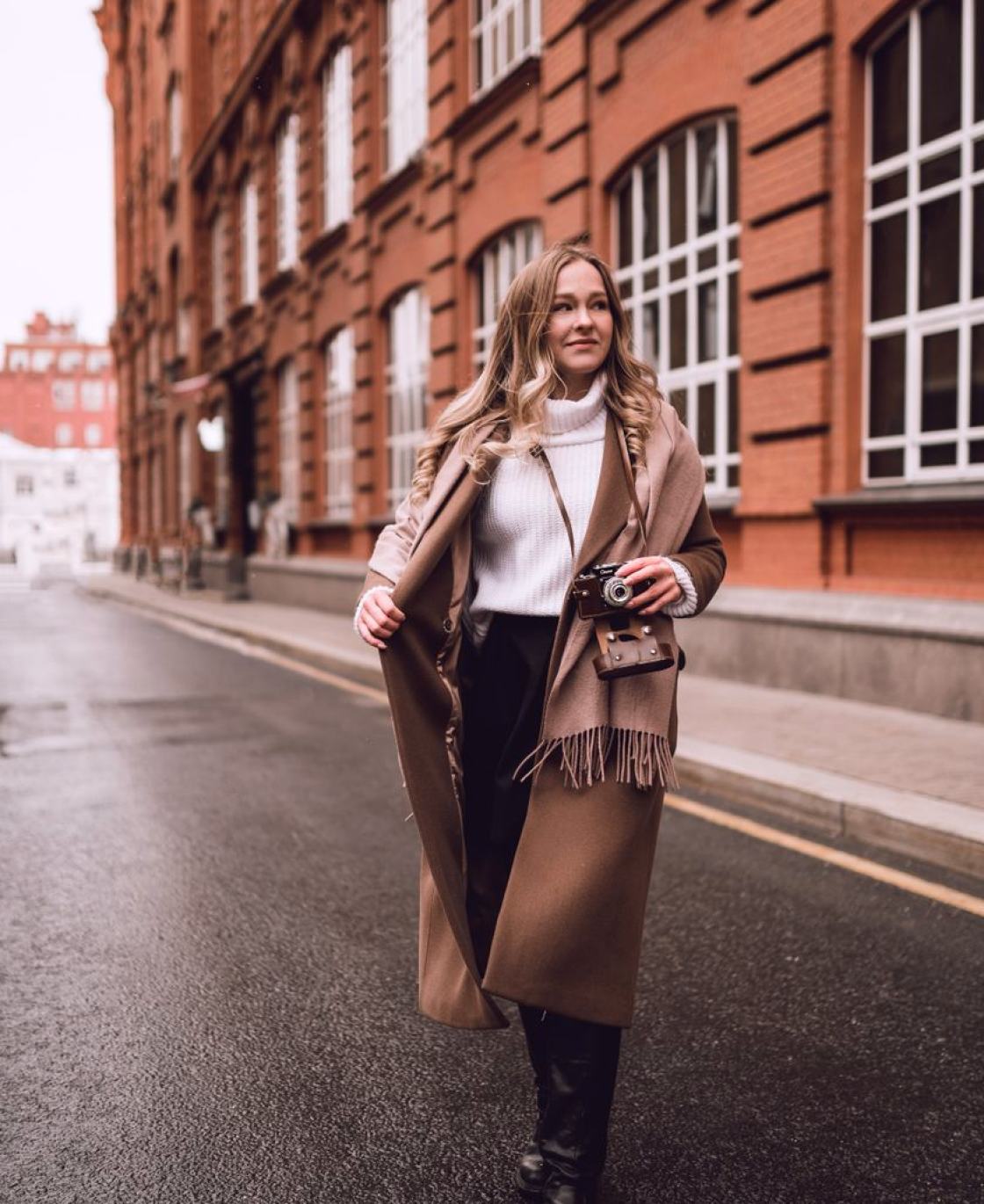
Start with less in the bag
When new members ask what to bring on a photo walk, I tell them to bring less than they think. One camera body, one lens, a spare battery and a small notebook are enough. Phones are welcome, and several of our best frames have come from them. The point of our walks is practising observation, and a heavy bag works against that, because every stop to dig for a second lens is a moment when the scene in front of you changes.
In mid autumn the case for travelling light grows stronger. Hands get cold, gloves make dials awkward, and the afternoon light fades sooner than people expect. A single fixed or modest zoom lens forces you to move your feet, to step closer to a doorway or crouch beside a fence. Those small physical decisions teach more about framing than any gear upgrade I have seen in my years as photo editor.
- One camera and one lens
- Spare battery kept in an inside pocket
- Thin gloves that still let you reach the controls
- A small notebook and pencil
The notebook is the quiet tool
Most members are surprised that I rank the notebook near the camera. We ask everyone to jot down where they were, what the light was doing and, when a conversation happened, the first name of the person and what they agreed to. This is not bureaucracy. A caption written three weeks later from memory is almost always vaguer and less honest than one built from a note made on the spot.
The notebook also slows you down in a useful way. Writing a line about a corner bakery window or a fence draped in leaves makes you look at it a second time. Often that second look reveals the detail worth photographing: a handwritten sign, a worn step, a child's mitten left on a railing. Pencil works better than pen in damp weather, and a rubber band keeps the pages from curling.
Reading light on neighbourhood streets
Our routes through Windsor are chosen partly for the light. Streets that run east to west catch low sun along their length, while side lanes between buildings give soft, even shade. In these weeks the sun sits low for much of the afternoon, which means long shadows and warm tones on brick, but also harsh contrast if you point the camera toward it. We teach members to turn their back to the sun, then turn around and try again, comparing the two.
A simple habit helps here: before raising the camera, stop for ten seconds and name three things the light is touching. A porch rail, a parked bicycle, someone's coat. This pause is a method, not a rule, and it keeps people from firing off dozens of frames of the same view. Fewer, more considered photographs make for better critique nights later, because there is something to discuss.
- Turn your back to the sun, then face it
- Look for open shade between buildings
- Pause ten seconds before the first frame
Walking pace and the group
The method that matters most is the pace of the group itself. We walk slowly, usually covering less than two kilometres in an afternoon, and we regroup at fixed corners so nobody feels left behind. Margaret Doucette, our lead organiser, plans each route and walks it beforehand to check for steps, narrow sidewalks and places to sit. This matters for members of every age and ability, and it is part of why our walks suit readers over forty who prefer an unhurried outing.
Within the group, we keep a rhythm of walking, stopping and looking. Some people photograph for ten minutes at one doorstep while others drift on. Both are welcome. We ask only that nobody crowd a stranger or block a path, and that members step back when someone declines to be photographed, without argument or explanation needed.
Asking before photographing people
Everyday scenes on a street naturally include people, and our approach is simple. If a person is the subject of the picture, we ask first, introduce ourselves, and explain that the photograph may be shared with the community. A smile and a short sentence do most of the work. If someone says no, we thank them and move on. Candid frames of public life are fine when people are small parts of a wider scene, but a recognisable face deserves a conversation.
We carry no formal paperwork on the walks, only the habit of asking and the notebook to record a first name. Priya Sandhu, who coordinates our interviews and writing, often joins the first walk of a season to show newer members how an introduction can sound natural rather than awkward. Most neighbours, we find, are glad to be asked.
- Ask first when a face is the subject
- Note a first name in the notebook
- Accept a refusal without discussion
After the walk: sorting and keeping
The work does not end when the group disperses. We encourage members to copy their files that evening, delete obvious misses the next morning and choose no more than five frames to bring to a critique night. Choosing is a skill of its own, and it is easier when the notebook sits beside the screen, reminding you what you actually saw and felt.
For storage, a plain folder named by date and route is enough. We avoid elaborate software recommendations because the method matters more than the tool. Back up to a second drive when you can. Several members have lost a season of photographs to one failed card or laptop, and a second copy costs little. Daniel Okafor, our photo editor, is happy to talk through simple filing habits at the start of any walk.
A good photo walk rests on ordinary things: a light bag, a notebook, patience with the light and courtesy toward neighbours. None of it needs expensive equipment, and all of it can be learned on a single afternoon. If these habits appeal to you, a walk through a Windsor neighbourhood this autumn is a gentle place to begin, and the group will happily share what has worked for them.