
The question that comes up every time
When someone writes to us about Portrait Evenings, the first line is nearly always a version of the same worry: I am not very good at this, and I do not like being photographed, so will I be out of place? I am Daniel, the photo editor, and I have read that message in many forms over the years since the collective began in 2017. It is a fair question, and it deserves a straight answer rather than a reassuring slogan.
The short answer is no. Nobody is expected to arrive with skill, a good camera or a comfortable relationship with the lens. The evenings exist precisely because most of us are awkward on one side of the camera or the other, and often both. This note explains what that means in practice, so that you can decide for yourself whether an evening suits you.
Autumn tends to bring a fresh wave of these enquiries. The light is softer and lower, people are back indoors after summer, and a few of you have decided that this is the season to finally try something new.
What an evening actually looks like
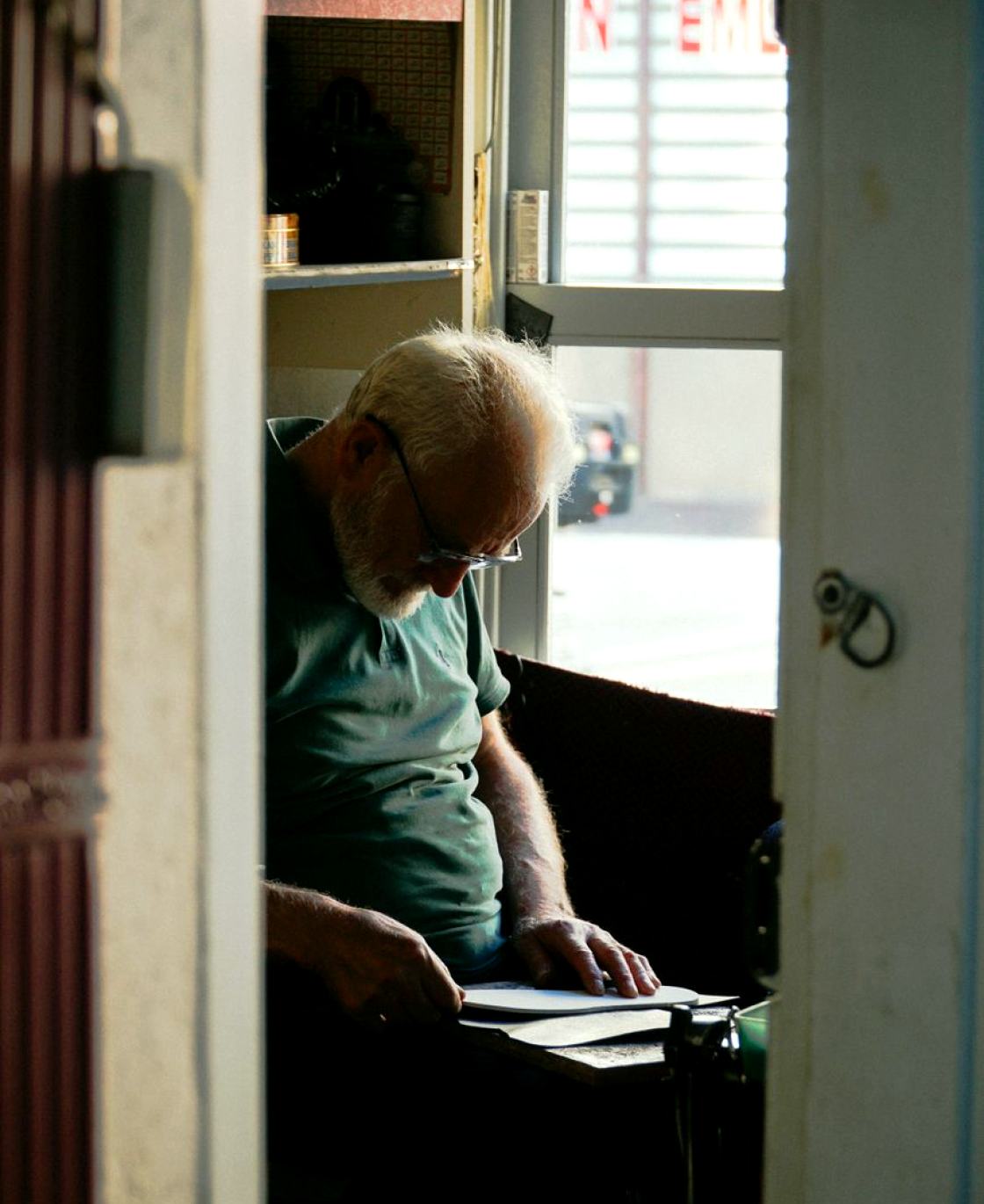
Portrait Evenings are informal sessions held in natural window light. We arrange a few chairs near a large window, keep the room warm and quiet, and take turns. One member sits, one photographs, and the others watch, chat or wait their turn with a cup of tea. There is no stage, no studio lighting and no pressure to produce a finished picture.
Each pairing begins with conversation rather than a camera. The photographer asks the sitter how they would like to be seen, whether they prefer to face the window or turn slightly away, and whether there is anything they would rather not have in the frame. Only after that do the shutters start. Most people find that the talking settles the nerves long before the first frame is taken.
We usually work in short rounds so no one is stuck in a chair for long. Some evenings are slow and contemplative, others are chatty and full of laughter. Both are welcome.
- Natural window light only, no flash or studio equipment
- Short rounds so everyone gets a turn on both sides
- Conversation comes before any photographs
You do not need experience or good gear
Members bring whatever they own. Some arrive with a mirrorless camera they have barely unpacked, others with an older film body, and a few with a phone. All of it works in window light, and the point of the evening is not the equipment but learning to look at a face, notice where the light falls and decide when to press the button.
If you have never taken a portrait, you are in good company. Margaret, our lead organiser, often says that the first ten frames of anyone's evening are practice, and that the useful ones come after the person in the chair has stopped performing and started talking. That is a skill of attention, not of technology.
If you are unsure how your camera behaves indoors, say so at the start. Someone in the room will gladly show you how to raise the exposure or steady your hands, and no one will treat the question as a silly one.
Consent is part of the craft
Posing and conversation are only half of what we practise. The other half is consent, and we treat it as a working skill rather than a formality. Before any image leaves the room, the sitter decides what happens to it: whether it stays on the camera, is shared with the group for feedback, or is deleted on the spot.
This is why people who dislike being photographed often end up enjoying the evenings. You are never handed a picture of yourself that you did not agree to. You can ask to see any frame, say that you would rather it not be kept, and expect that request to be respected without explanation.
For those who go on to photograph neighbours and family for essays or stories, this habit carries over. Asking plainly, listening to the answer and remembering that a portrait is a shared moment rather than a possession is what keeps documentary work honest.
- Sitters see their frames and may ask for any to be deleted
- Nothing is shared beyond the room without a clear yes
- The same habits apply when photographing people outside the group
What to bring and how to prepare
Preparation is light. Bring a camera of any kind, a charged battery and a memory card with some free space. Wear something you feel at ease in; plain, solid colours tend to photograph more calmly than busy patterns, but nobody will correct your choice. If you wear glasses, bring a soft cloth, since window light shows every smudge.
It also helps to think, even briefly, about how you would like to be seen. Not a pose, just a mood: relaxed, thoughtful, amused. Having a loose idea gives the photographer something to work with and gives you something to hold on to when the camera comes up.
Arrive a little early if you can. The first few minutes are mostly spent finding a chair, saying hello and getting used to the room, and people who rush in at the last moment tend to feel the nerves more.
- Any camera, with a charged battery and a free card
- Comfortable clothing in plain colours if you like
- A loose sense of how you would like to be seen
Common worries, answered plainly
Some people ask whether they will be made to sit while strangers watch. You will sit with one photographer at a time, and others in the room are there to learn, not to judge. If you would prefer a quieter corner, say so and we will arrange the chairs accordingly.
Others worry that they are too old, too shy or not photogenic. Our members range widely in age and confidence, and the faces we find most interesting to photograph are rarely the ones that claim to be photogenic. Character shows in window light in a way that polish does not.
A third worry is whether the evening will feel like an audition. It will not. There are no marks, no winners and no expectation that you return with a portfolio. You are there to practise, to talk and to leave having seen a little more clearly.
If you have been wondering whether you are the right sort of person for a Portrait Evening, the honest reply is that the only requirement is curiosity about people. Come as you are, bring whatever camera you have and expect to be asked what you would like, not told what to do. If you have a question we have not covered here, write to us through the contact page and Thomas will reply.