
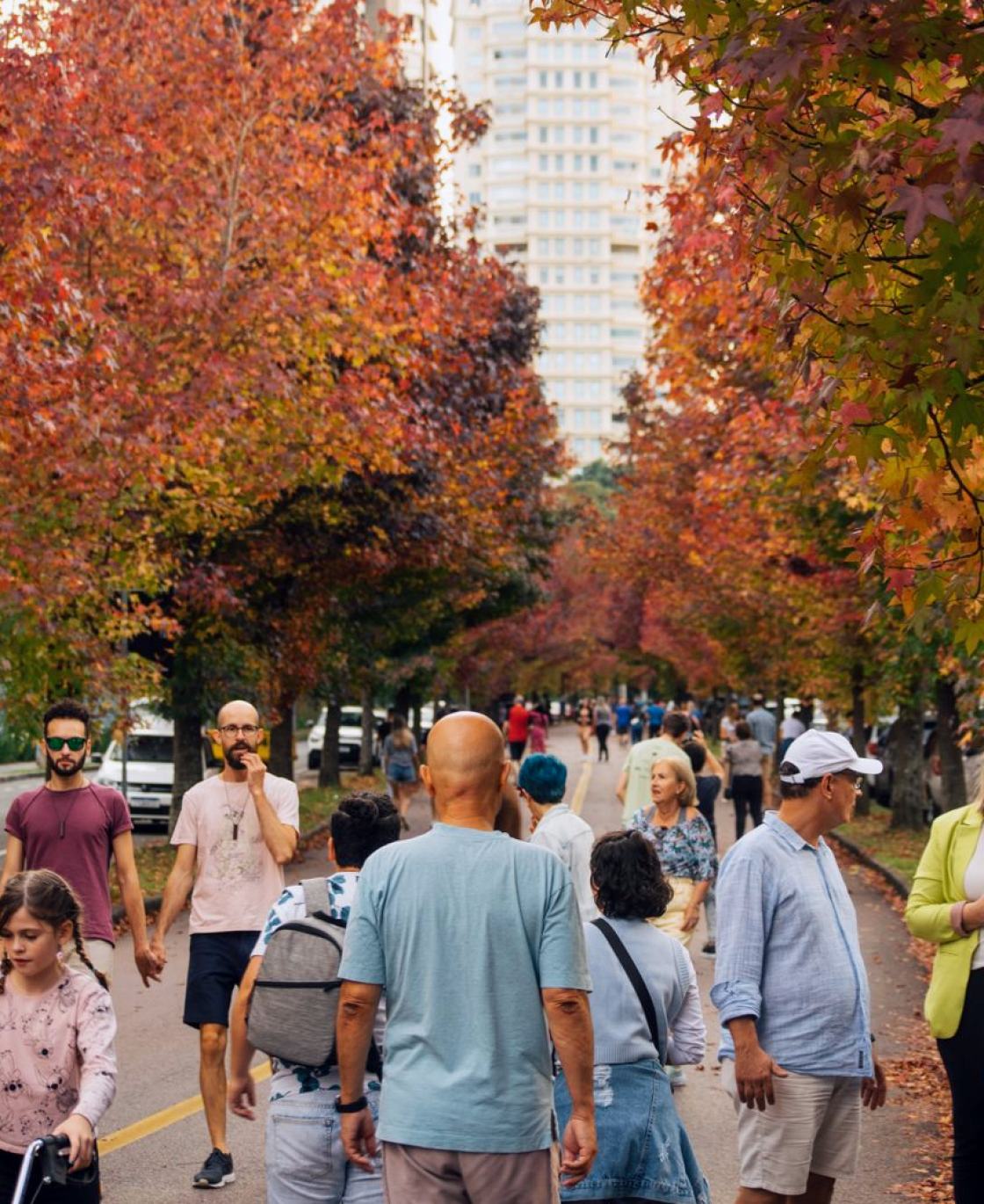
Scouting the street before anyone arrives
A Photo Walk looks effortless on the day, and that is mostly the result of an hour or two spent on the route beforehand. I walk the streets a few days earlier, at the same time of day the group will be out, because light on Riverside Drive at ten in the morning is nothing like light at four in the afternoon. I note where the sun falls, where shade gets deep, and where a doorway or fence line gives a beginner something simple to frame.
I also count the pauses. A good route has a bench, a corner with space to stand without blocking the sidewalk, and somewhere warm to regroup when the weather turns. In mid autumn that matters more than people expect, since cold hands make for rushed pictures. If a stretch has no place to stop, I shorten it or drop it.
None of this is about finding spectacular scenes. We are looking for ordinary ones: a hardware store window, a crossing guard, leaves collecting against a curb. The route simply has to give members enough variety to practise noticing.
- Visit the route at the same hour as the walk
- Mark sunny and shaded stretches
- Find a bench or sheltered spot for regrouping
Keeping the group small and unhurried
We keep walks to a size where everyone can talk to everyone. Once a group grows too large, it starts to move like a crowd, and a crowd with cameras draws attention that changes the street. A smaller group lets people drift apart to follow their own interest and drift back together without anyone feeling left behind.
The pace is deliberately slow. I ask people to stop wherever something catches them and stay a minute longer than feels natural, because the second or third look is usually where the better picture sits. Some members cover three blocks in an hour, and that suits us fine.
I walk at the back rather than the front. That way nobody is chasing me, and I can see who is lingering over something interesting and who might want a quiet word about what they are noticing.
What I say at the start, and what I leave out
The opening five minutes are short. I welcome people, say where we will finish, and give one small prompt for the walk, such as looking for repeated shapes or for signs of someone's daily routine. A single prompt gives people a thread to follow without making the afternoon feel like an assignment.
I leave out technical lecturing. Members arrive with everything from phones to older film bodies, and settings talk loses half of them straight away. If someone wants to ask about exposure, we do that on the pavement, in front of the actual scene, where the answer is visible.
I do spend a minute on courtesy. People live and work on these streets, and a photograph taken with care starts with how you behave before you lift the camera.
- One prompt per walk, never a list
- Technical questions answered on the spot
- A short word on courtesy before we set out
Consent, courtesy and the neighbours
Documentary work depends on trust, and the walks are where members first practise it. Our rule is plain: if a person is clearly the subject of a photograph, ask. A smile and a short question costs nothing, and it often leads to a conversation that gives the picture a name and a context.
We also pay attention to children, to private yards and to people who are plainly having a hard day. Some scenes stay unphotographed, and I say so when it comes up. A member who puts the camera down in those moments is doing the work properly.
Shopkeepers are worth greeting too. A friendly word at the start of a block, and a note that we will be passing quietly, has saved us from misunderstandings more than once and sometimes opened a door to a better look inside.
The hour after the walk
We finish somewhere indoors and sit down together. Nobody is asked to present anything, but members can show one frame from the walk on a screen or a printed contact sheet if they like. The point is to hear what each person noticed, which is often not what I expected.
I take notes during this part, and they shape later Community Critique Nights and the choice of routes. If three people mention the same stretch of sidewalk, I know it is worth returning to in different light or a different season.
Afterward I check the route again in my head: what slowed us, where we bunched up, whether the finish was easy to find. Small corrections made then are what keep the next walk feeling relaxed.
- Show one frame, only if you wish
- Notes feed future routes and critique nights
Why the preparation stays out of sight
If a member comes home thinking they simply went for a pleasant stroll and took a few pictures they like, the preparation has done its job. The scouting, the pacing and the courtesy are meant to sit quietly under the afternoon.
That is true of most documentary work. The picture a reader sees took patience that the picture itself rarely shows, and learning to appreciate that patience is part of what a Photo Walk teaches.
If you are curious, come along to a walk and watch how the afternoon is held together. You will likely notice something new about your own neighbourhood in the first block.
A Photo Walk is simple on the surface and carefully held underneath: a scouted route, a small group, one gentle prompt and a firm habit of courtesy toward the people whose streets we borrow. None of it is complicated. It is a matter of preparing well, moving slowly and paying attention. If that sounds like an afternoon you would enjoy this autumn, get in touch and we will tell you about the next route.